Where Should Downspout Water Drain Around a Connecticut Home?
How Downspout Drainage Works
Downspouts should move roof water far enough away from a Connecticut home that it does not collect near the foundation, flow back toward the structure, or create saturated areas in the yard.
As a general building-science guideline, surface downspouts should discharge at least 5 feet from the foundation, while underground catchment systems are typically located at least 10 feet away. The right drainage point still depends on the property’s slope, soil, landscaping, septic system, and surrounding conditions.
Understanding where the water goes after leaving the downspout is just as important as keeping the gutter itself clear.
Where Should a Downspout Discharge Water?
The best discharge area allows runoff to continue moving away from the house instead of collecting in a low spot. A good location should generally:
- Direct water away from the foundation
- Follow ground that slopes away from the home
- Avoid creating standing water
- Limit erosion around landscaping
- Keep concentrated runoff away from septic components
- Avoid directing water toward neighboring property
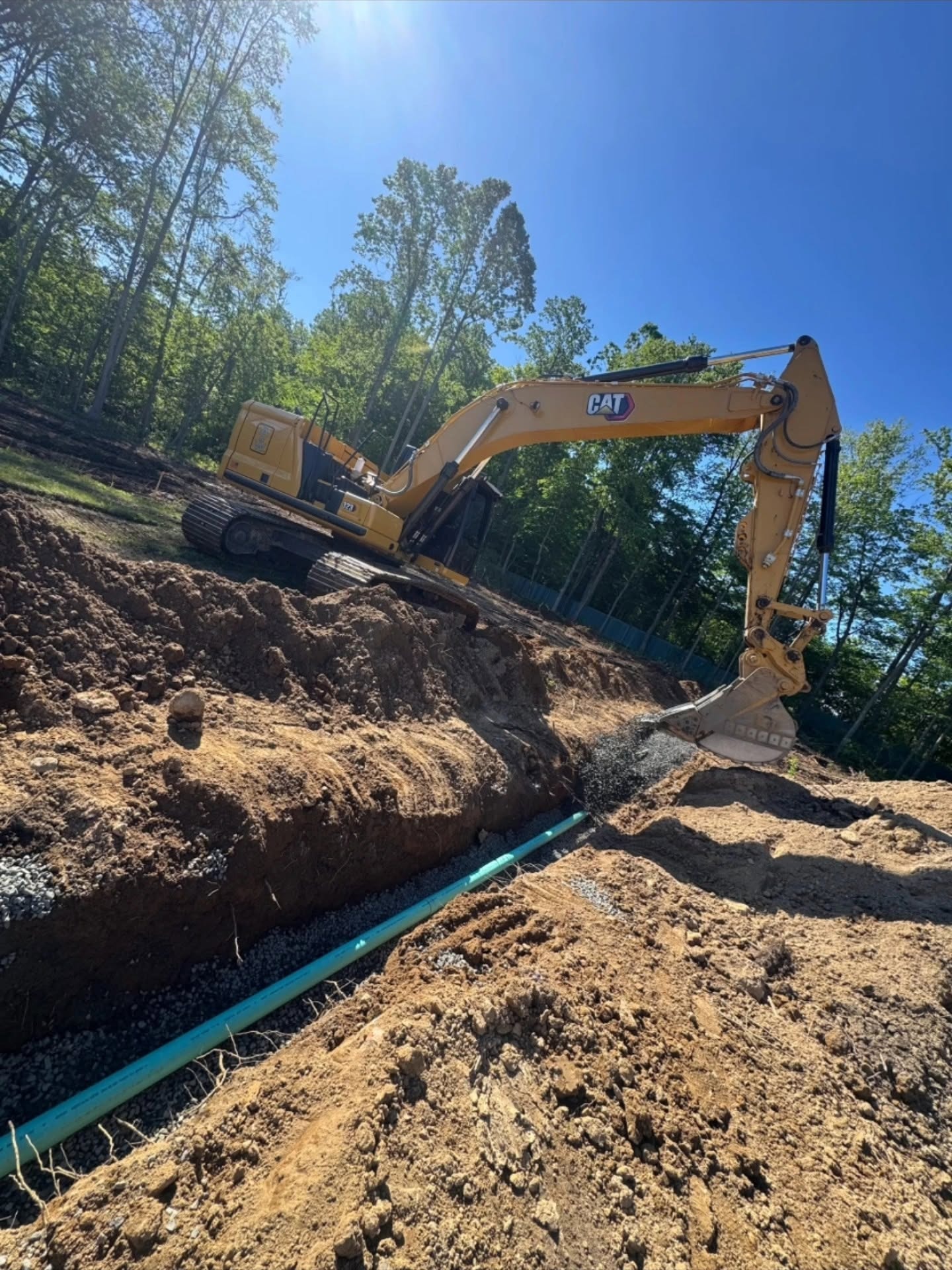
Simply extending a downspout several feet may not solve the problem if the surrounding yard slopes back toward the house. When runoff needs to be redirected to a more suitable discharge area, Professional drainage trenching and downspout redirection can help manage water flow across the property.
Why Does Grading Matter Around Downspouts?
Downspouts and property grading work together.
Even when a downspout extends away from the foundation, poor grading can cause the water to turn back toward the home or collect in low areas. Signs that grading may be contributing to the problem include:
- Water flowing back toward the foundation
- Puddles remaining after rainfall
- Soft or muddy soil near the home
- Small erosion channels in the yard
- Runoff collecting near walkways or driveways
If these problems continue, the surrounding slope and drainage pattern may need professional evaluation.
When Is a Downspout Extension Enough?
A surface extension can be a practical solution when the main problem is a downspout releasing water directly beside the foundation.
Extensions carry roof runoff farther into the yard, where it can drain across properly sloped ground.
Homeowners should check that the extension:
- Stays securely connected
- Points away from the house
- Does not create a new low spot
- Remains clear of leaves and debris
- Ends where water can continue moving safely
If water still pools after adding an extension, the problem may involve poor grading, soil drainage, or the broader drainage pattern across the property. In these cases, Professional grading and sloping services can help improve how runoff moves away from the home.
Do Splash Blocks Help With Downspout Drainage?
Splash blocks can help guide water away from the downspout opening and reduce erosion directly below it.
They work best when the surrounding ground already slopes away from the home.
A splash block alone may not be enough when large amounts of roof water repeatedly collect near the foundation or when the yard slopes toward the structure.
When Is Underground Downspout Drainage Appropriate?
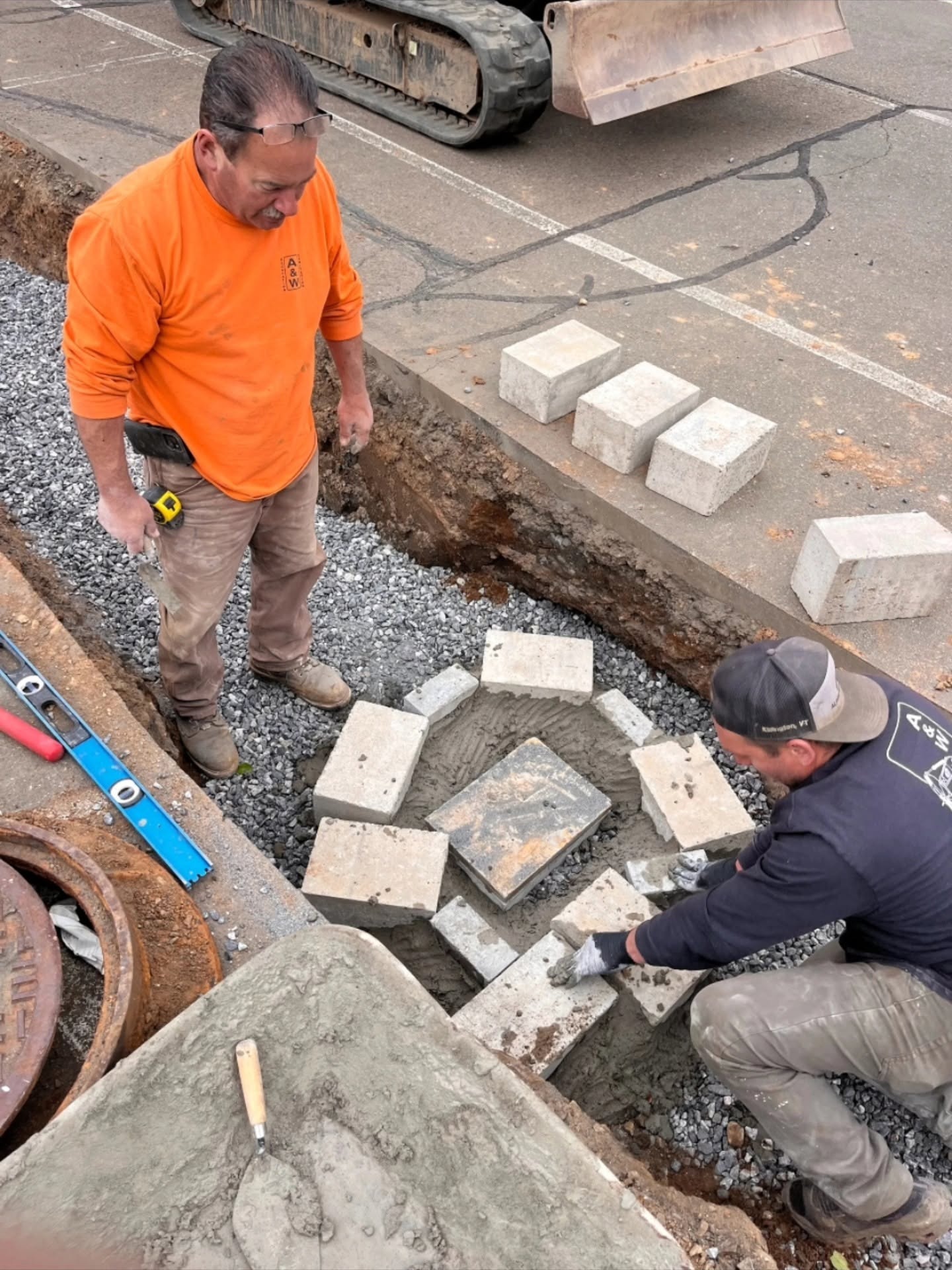
Underground downspout drainage may be appropriate when a simple surface extension cannot move roof runoff far enough away from the home. This is often useful on properties with limited slope, tight yard space, or recurring pooling near the foundation.
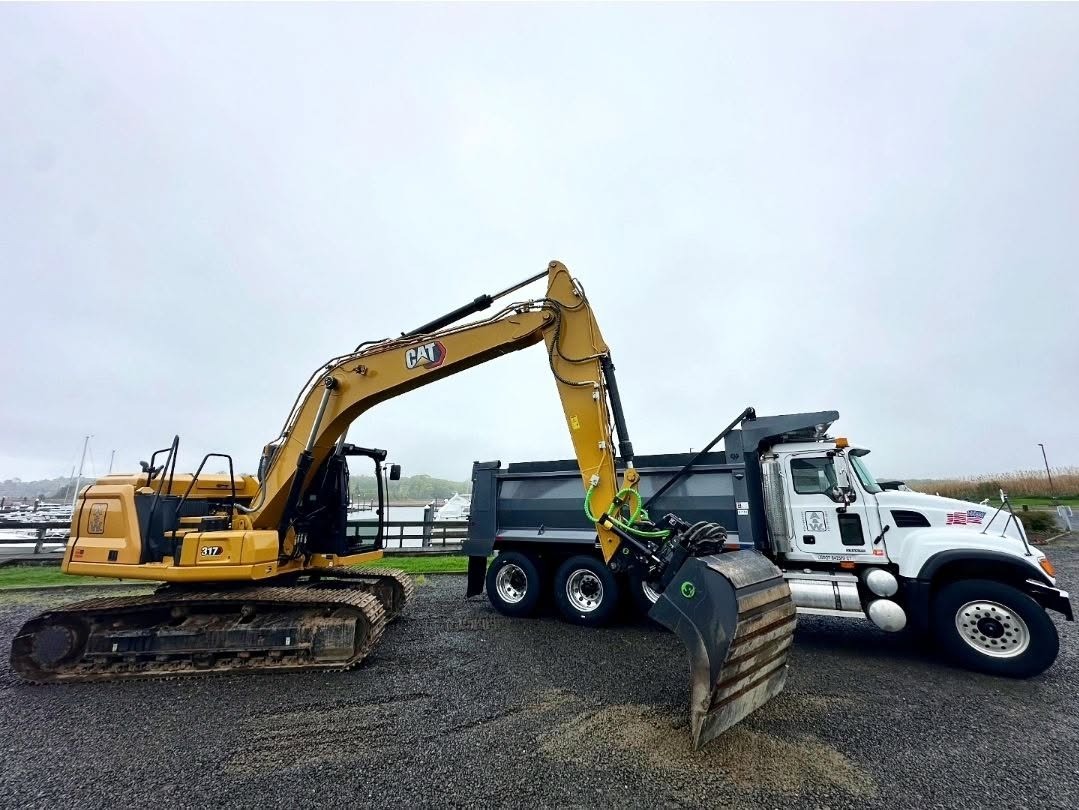
A properly designed underground line should carry water to a safe discharge point with the correct slope. If the project requires excavation to install or reroute drainage, A&W Sanitation’s residential excavation services can support drainage improvements around Connecticut homes.
Can Downspout Water Go Into a Rain Garden?
Yes, downspout water can sometimes be directed into a properly designed rain garden that allows roof runoff to collect and gradually soak into the soil. The location must be chosen carefully so water does not infiltrate too close to the foundation, well, or septic system.
For Connecticut homes, the overall property layout, soil conditions, and drainage pattern should be considered before using a rain garden for downspout runoff. Proper siting helps reduce pooling while protecting nearby structures and septic components.
Signs Your Downspout Drainage Is Not Working Properly
Check the property during or shortly after rainfall. Warning signs may include:
- Water pooling near the foundation
- Muddy or saturated soil around downspouts
- Basement or foundation dampness
- Soil washing away from discharge areas
- Water crossing walkways or driveways
- Downspout water flowing back toward the house
- The same low area filling after every storm
These symptoms can result from more than one issue, so the downspout should be considered as part of the overall drainage pattern.
When Should You Call a Drainage Professional?
Simple adjustments may be enough when an extension has moved or a splash block is no longer positioned correctly. Professional evaluation may be appropriate when:
- Water repeatedly collects near the house
- Extensions do not solve the problem
- The ground slopes toward the foundation
- Underground drainage may be needed
- Erosion continues after rainfall
- Runoff is affecting driveways or landscaped areas
A professional can evaluate elevations, soil conditions, existing drainage paths, and nearby structures before recommending trenching, grading, or another solution. Schedule drainage service with A&W Sanitation if runoff or pooling problems continue around your Connecticut property.
Frequently Asked Questions
How far should a downspout drain from the house?
Building-science guidance generally recommends at least 5 feet for surface discharge. The required distance may be greater depending on slope, soil, and the drainage system design.
Can a downspout drain next to the foundation?
It should not regularly release concentrated roof water directly beside the foundation, where the surrounding soil can become saturated.
Is a splash block enough for a downspout?
It may be enough when the ground already slopes away properly. Persistent pooling usually indicates that additional drainage improvements should be considered.
Can downspouts be connected to underground drainage?
Underground drainage can be used to carry downspout runoff away from the home when the piping has the proper slope and a suitable discharge point.
What if water still pools after extending the downspout?
The problem may involve poor grading, compacted soil, a low area, or inadequate drainage elsewhere on the property.
Plan the Right Drainage Solution for Your Property
Effective downspout drainage depends on more than how far water travels from the gutter. The discharge point, ground slope, soil conditions, and nearby foundation or septic components all influence how runoff moves across the property.
If water continues to collect around your Connecticut Shoreline home, A&W Sanitation & Excavation can evaluate the drainage pattern and determine whether downspout redirection, drainage trenching, or grading is appropriate. Contact A&W Sanitation & Excavation to schedule a professional drainage evaluation.