After a Dry Summer: How Grading and Sloping Prepare Your Property for Fall Rain
Fall Drainage Preparation for Your Property
After a dry summer, drainage problems may be easy to overlook. Once fall rain returns, however, low areas, uneven slopes, compacted soil, and poor runoff patterns can quickly become more noticeable.
For Connecticut Shoreline properties, proper grading and sloping help control how rainwater moves across the land. Directing runoff away from structures, driveways, and low areas can reduce standing water, erosion, and other drainage concerns as wetter seasonal conditions begin.
Why Grading Matters Before Fall Rain
Grading shapes the ground so water follows a planned path instead of collecting where it should not.
When a property has the correct slope, rainwater can move away from important areas rather than settling near foundations, driveways, landscaped sections, or septic components.
Proper property grading can help:
- Improve surface drainage
- Direct runoff away from structures
- Reduce standing water
- Limit soil erosion
- Improve long-term ground stability
- Prepare areas for landscaping or other property improvements
Fall is a practical time to evaluate these conditions because rainfall can reveal drainage patterns that may not have been obvious during dry summer weather. If runoff is collecting in low areas or moving toward structures, Professional grading and sloping services can help correct elevations and improve how water moves across the property.
Watch for Standing Water and Low Areas
One of the clearest signs of a grading problem is water that remains on the property after rainfall.
Check for:
- Puddles that remain long after rain ends
- Soft or muddy sections of the yard
- Water collecting near buildings
- Low spots that repeatedly fill with water
- Saturated areas near driveways or walkways
Recurring standing water often means the property is not directing runoff effectively.
Simply filling a low spot may not solve the problem if the surrounding slope continues sending water toward the same area. The entire drainage pattern should be considered.
Check How Water Moves Around the Foundation
The ground surrounding a home or other structure should generally encourage water to move away rather than toward the foundation.
After rainfall, look for:
- Water collecting close to the building
- Soil erosion along the foundation
- Channels formed by concentrated runoff
- Persistent damp areas near basement walls
- Ground that slopes toward the structure
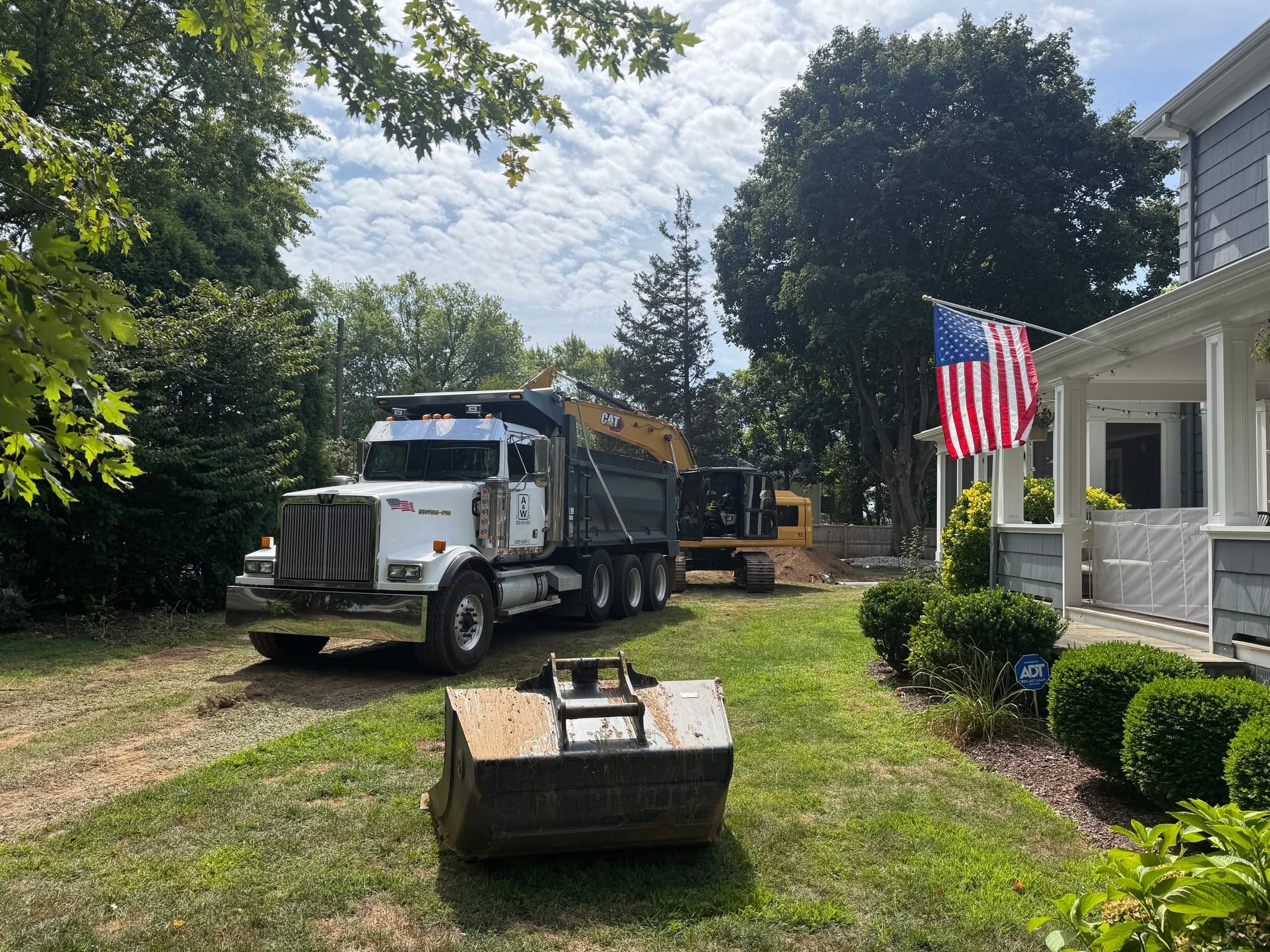
Correcting surrounding elevations can improve how runoff moves away from the foundation. When drainage concerns involve larger changes to the ground around the property, Residential excavation services can support grading, drainage, and site improvements based on the property’s existing conditions.
Look for Signs of Soil Erosion
Fall rain can expose areas where runoff is moving too quickly across the property.
Common signs include:
- Washed-out soil
- Small channels or grooves
- Exposed roots
- Mulch or topsoil moving downhill
- Bare areas developing on slopes
Proper grading and sloping help manage runoff by creating more controlled drainage patterns.
In some situations, grading may need to be combined with another drainage solution when the property receives large amounts of runoff or has challenging terrain.
Review Driveways and Other Hard Surfaces
Rainwater moves differently across driveways, patios, walkways, and other hard surfaces because it cannot easily soak into the ground.
Pay attention to:
- Water flowing toward the house
- Runoff collecting along driveway edges
- Erosion where pavement meets soil
- Water crossing walkways
- Repeated puddling near hardscaped areas
Adjusting surrounding elevations can help guide runoff toward a more appropriate drainage area. If drainage problems are affecting the driveway or its surrounding grade, Professional driveway excavation can help establish the proper base, elevation, and drainage conditions before paving or property improvements.
When Grading and Sloping May Be Appropriate
Recurring drainage problems often indicate that the existing ground elevations are no longer directing water effectively across the property.
Grading or sloping may be worth considering when:
- Water repeatedly collects in the same low areas
- The ground directs runoff toward a structure
- Soil erosion continues after rainfall
- Drainage problems affect driveways, walkways, or landscaped areas
- Previous grading no longer provides effective water movement
- Property improvements require more accurate elevation control
A professional site evaluation can assess existing slopes, soil conditions, elevations, and runoff patterns to determine whether grading adjustments are appropriate for the property.
Why Professional Grading Makes a Difference
Effective grading involves more than simply moving soil. Proper elevations must account for surrounding structures, landscaping, existing drainage patterns, and the direction of surface runoff across the property.
A well-planned grading approach can improve water movement, reduce recurring drainage concerns, and support the long-term stability and use of the site.
If your property is showing signs of poor drainage, erosion, or improper slope, Contact A&W Sanitation & Excavation to schedule a professional site evaluation.
Frequently Asked Questions
What is the difference between grading and sloping?
Grading involves reshaping and leveling areas of the property to achieve planned elevations. Sloping establishes the direction and angle needed to help water move toward an appropriate drainage area.
Can poor grading cause standing water?
Poor or uneven grading can create low areas where rainfall collects instead of draining away. Correcting elevations may help improve water movement across the property.
Can grading help reduce erosion?
Proper grading can help control the direction of surface runoff and reduce concentrated water flow that contributes to soil erosion.
Should grading be done before fall rain?
Grading can be completed at different times of year, but addressing known drainage concerns before wetter conditions may help prepare the property for increased seasonal rainfall.
Does every drainage problem require grading?
Not every drainage issue requires grading. The cause may involve compacted soil, gutters, underground drainage, or another site condition. A professional evaluation can identify the source of the problem and determine whether grading, drainage improvements, or another solution is appropriate.
Improve Your Property’s Drainage Before Fall Rain
Fall rain can quickly reveal low spots, poor slopes, erosion, and other drainage problems that were difficult to notice during a dry summer.
If water is collecting around your property or runoff is moving in the wrong direction, A&W Sanitation & Excavation can evaluate the site and determine whether professional grading and sloping can improve drainage. Schedule a grading and sloping evaluation with A&W Sanitation & Excavation to prepare your Connecticut Shoreline property for the wetter months ahead.